
Solving the West’s Greatest Strategic Threat: The Demographic Crisis and the Solution of Republican Capitalism

I am thrilled to share that my new research article has just been published in the journal Society.
For years, we have been witnessing a growing paradox: Western nations are becoming wealthier than ever before, yet simultaneously collapsing into a demographic winter. Plummeting birth rates are no longer just dry statistics—they are undeniably the greatest and most severe strategic threat currently facing the future of Western civilization.
In this article, I present a new theory that offers a structural and practical solution to this existential problem. The research analyzes how the success of late capitalism inadvertently erodes the mediating institutions—family and community—upon which it relies. From this, I introduce the model of “Neo-Jerusalemite Republican Capitalism” (NJRC): a framework proving that free markets and economic liberty do not have to come at the expense of the family. Instead, they can and must be supported by a robust moral and communal infrastructure that will secure our future.
I invite you to read the full article, which is now completely free to access (via SharedIt), and join the discussion on how to ensure the continuity of the West.
Read the full article here: https://rdcu.be/feoHq

Cite this article: Shoval, R. A New Model of Republican Capitalism: Addressing Capitalism’s Mimetic Contradictions. Soc (2026). https://doi.org/10.1007/s12115-026-01183-3
A New Model of Republican Capitalism: Addressing Capitalism’s Mimetic Contradictions
Abstract
This article analyzes the paradoxical interplay between capitalism, mimetic desire (Girard’s theory), and intermediary insti tutions. It argues that while family and community initially foster capitalism by strengthening social bonds, late capitalism paradoxically erodes them. This dynamic leads to observable social fragmentation and demographic decline, evident in Western fertility rates, undermining capitalism’s long-term success. The article proposes a new theoretical capitalist frame work, “Neo-Jerusalemite Republican Capitalism” (NJRC), a novel model. Using Israel as an illustrative case, the article suggests that sustained economic growth can coexist with resilient mediating institutions, potentially moderating mimetic rivalry and correlating with higher fertility rates. It advocates for strategically limited state intervention to preserve vital institutional frameworks, fostering community cohesion and demographic stability. This model offers a practical middle ground, addressing capitalism’s inherent contradictions and pressing Western demographic challenges.
Thanks for reading The Shoval Perspective! This post is public so feel free to share it.
Introduction: The Social Morality of Capitalism—Between Success and Alienation Capitalism is generally perceived as an economic system producing remarkable material and scientific achievements, including economic prosperity, technological progress, modern medicine, expanded individual freedoms, and dra matic improvements in the status of women. However, these acknowledged successes frequently attract criticism claim ing that capitalism is fundamentally an immoral mechanism of exploitation. In this article, I seek to examine explicitly the question: What is the relationship between the mediat ing social institutions—family, religion, and community— and the stability and sustainability of capitalism? Further more, how can this relationship be explained through René Girard’s theory of mimetic desire?
The article’s central claim is that there is a two-stage dynamic in the relationship between capitalism and mediating social institutions. Initially, these institutions ena bled the rise and prosperity of capitalism, as illustrated by Max Weber in his discussion of the Protestant Ethic. How ever, in the second stage, capitalism—through economic prosperity, social mobility, and globalization—weakens the institutions that provide the social and moral infrastructure for its initial success. The outcome is an ongoing social cri sis characterized by increasing alienation, loneliness, and demographic crises, such as declining fertility rates in many Western countries. This unraveling became particularly acute during the neoliberal era (1970s–2020s), where the shift toward financial dominance and debt-driven growth accelerated the erosion of these essential social foundations (O’Hara, 2025).
A fundamental principle for understanding the social and cultural dynamics of capitalism lies in René Girard’s con cept of mimetic desire. According to Girard, human beings do not desire objects out of an isolated internal wish but rather covet what others covet (Girard, 1965, 1987). Human desire emerges within a field of imitation. We learn to desire not according to the intrinsic value of things but according to their value in the eyes of others. Initially, this mecha nism fosters a sense of belonging and cohesion. Members of a community desire the same things, value the same achievements, and orient themselves toward shared models of a good life. However, as these desires converge on par ticular objects such as status, prestige, and symbols of suc cess, and as these resources come to be perceived as limited, internal tensions gradually give rise to rivalry. Capitalism, in many respects, effectively channels this dynamic in a pro ductive direction. Instead of allowing competitive desires to escalate into violence, capitalism directs them toward economic competition, entrepreneurship, and innovation. In doing so, capitalism overcomes the logic of a zero-sum game and transforms envy into action. The article will exam ine this dynamic and its broader social consequences in the following sections.
Through the distinctive case study of Israel, this article examines how robust capitalist growth can coexist with stable social institutions and sustained high fertility rates. It introduces an alternative theoretical framework termed Neo-Jerusalemite Republican Capitalism (NJRC), where economic freedom and material prosperity are embedded within resilient social institutions. These institutions foster societal stability, intergenerational continuity, and com munal purpose, thereby alleviating mimetic tensions that might otherwise escalate into social fragmentation. Thus, the author contends that governments and other stakeholders should recognize mediating institutions as fundamental to the long-term, stable sustainability of free-market capitalism rather than simply traditional moral structures.
Between Envy and Belonging: Contemporary Discussions on Capitalism and Mimetic Desire
René Girard’s mimetic desire concept has recently received much attention from sociologists and economists. For instance, Peter Thiel argues that economic competition often arises not primarily from pure economic rationality or objec tive material interests but predominantly from the dynamics of imitation and replication of the desires and aspirations of competing actors. Thiel holds that various businesses often pursue similar economic goals that produce intense competi tion because others perceive them as desirable and prestig ious despite the fact that they are economically inefficient. Thus, mimetic desire occasionally results in resource waste and social damage rather than genuine and sustained value (Thiel, 2014, pp. 32–37).
Paul Dumouchel expands upon this idea by asserting that resource scarcity itself is not merely an objective fact but largely a consequence of social and economic systems. According to Dumouchel, these systems create or intensify mimetic rivalry through the cultural and political struc tures shaping individual aspirations. In his view, scarcity becomes a driver for endless rivalry precisely due to this social dynamic, wherein identical goals and desires are pre sented to numerous individuals who then compete among themselves (Dumouchel, 2014, pp. 15–48).
Furthermore, Mark Anspach points out that mimetic desire can become destructive when society lacks institu tions that can adequately regulate its dynamics. Moreo ver, he states that societies without such institutions tend to develop scapegoat mechanisms that direct the public’s attention toward external culprits in order to preserve social cohesion. However, despite such mechanisms offering tem porary social stability, they do not provide long-term stabil ity and mask more profound social crises (Anspach, 2017, pp. 9–16).
In a related article, Deirdre McCloskey contends that without a moral foundation, it is impossible to understand capitalism’s historical and economic success. She states that economic prosperity requires moral structures, including trust, equity, and individual responsibility, as well as self interest. However, McCloskey provides limited discussion regarding the specific role played by social institutions like family, community, and religion and how these concretely promote and sustain these values (McCloskey, 2016, pp. 117–129, 172–183, 511–519).
From this arises the distinctive contribution of this article. Unlike Thiel and Dumouchel, who primarily focus on the direct economic impacts generated by mimetic rivalry, and Anspach, who emphasizes the destructive outcomes possible in the absence of stable institutions, this article examines how specific social institutions, such as family, community, and religion, are not merely instruments for mitigating ten sions but essential structural conditions for the long-term viability of capitalism itself. In contrast to McCloskey, who broadly emphasizes moral values in capitalism without extensive elaboration on specific institutions, this article introduces a clear and precise model—Neo-Jerusalemite Republican Capitalism (NJRC)—which positions mediat ing institutions at its core as vital mechanisms for creating a stable and sustainable equilibrium between market dynamics and the need for lasting social and moral cohesion.
The Moral Foundations of Capitalism
According to Adam Smith (Smith, 1759/1982, 1776/1976), Friedrich Hayek (Hayek, 1944, 1960), and Milton Friedman (Friedman, 1962; Friedman & Friedman, 1980), capitalism is an economic and social system rooted in moral values, including individual freedom, social responsibility, equity, and creating genuine value. For example, Smith saw the market as relying on trust, fairness, and reciprocity because one can only achieve personal gain by generating value for others.
However, this article argues that it is precisely the suc cessful realization of these moral principles that creates an inherent contradiction. The more capitalism becomes suc cessful, the more it creates dynamics that threaten the social institutions upon which it initially prospered: family, reli gion, and community.
Before discussing that contradiction, we will clarify the concept of capitalism used in this article. Liberalism primar ily addresses the relationship between the individual and the state, focusing on civil and political rights. Capitalism, by contrast, centers primarily on economic freedom, production and entrepreneurship, market activities, competition, and economic value creation. Although clearly interrelated, lib eralism and capitalism are not identical (Mises,/19272005, pp. 26–58). For example, some countries, including China and Singapore, have free-market economies but significantly restrict civil liberties.
Moreover, readers should distinguish between the per spectives that have evolved from the initial capitalist idea, many of which make various assumptions about human nature and social order. The libertarian approach assumes the individual as a rational agent and recognizes the neces sity of a minimal external institution, the “night-watchman state,” to manage conflicts and protect property rights (Noz ick, 1974). The anarcho-capitalist approach, even more opti mistic, believes in the possibility of a social order based exclusively on voluntary cooperation without any govern mental authority (Rothbard, 1973).
In this article, however, the focus is on an approach view ing human beings as inherently social creatures who require stable social institutions to actualize economic liberty. Utilizing René Girard’s concept of mimetic desire, I will demonstrate how the economic success and social mobility generated by capitalism systematically undermine precisely those mediating institutions—family, religion, and commu nity—that initially facilitated its flourishing. This inherent tension between capitalism and these institutions exists, in varying degrees, within all capitalist societies. The follow ing sections will show that recognizing the essential role of mediating institutions can form the basis for constructing a new, sustainable model of capitalism.
Mimetic Desire and Capitalism: From Social Cohesion to Internal Rivalry
As previously discussed, René Girard identifies mimetic desire as an essential socio-cultural mechanism underlying human behavior. Here, we examine how this desire oper ates within the capitalist framework and its implications for social institutions.

Mimetic desire emerges within a field of imitation. Ini tially, it fosters a sense of belonging and social cohesion as members of a community aspire toward similar goals, value similar achievements, and orient themselves toward shared models of a good life. However, as more individu als strive for the same objects, such as status, prestige, and symbols of success, and as these resources are increasingly perceived as limited, intense competition, envy, and rivalry begin to emerge. According to Girard’s framework, desire becomes more aggressive as it approaches the object and confronts competitors. In fact, many people see resources such as honor and social status as zero-sum gains. That is to say, when one person wins, another loses. Therefore, we deprive others of the coveted resource we obtain (Girard, 1979, chaps. 1–2; 1987, pp. 7–47). Capitalism channels such mimetic dynamics by redirecting possibly violent rivalries into economic and entrepreneurial competition, and so moderates social pressures. Therefore, mimetic tensions that could manifest as violent or destructive drive economic growth, a capitalist necessity that mitigates the material zero-sum game. However, this author contends that such solutions are incomplete because mimetic activity is part of market activities and extends to social prestige, eroding the mediating institutions that capitalist systems require for long-term sustainability.
In contrast, dissatisfied communities with internal ten sions that lack the means to provide their members with hope and the prospect of growth must find alternative meth ods to provide social cohesion, such as directing ire exter nally in order to restore unity and internal cooperation. A clear example is found in homogeneous communist societies lacking mechanisms for economic growth, such as North Korea, which maintain internal control through oppressive governance while simultaneously unifying their populations against external scapegoats, exemplified by South Korea and American capitalism.
However, paradoxically, even when mimetic systems cre ate economic growth, that growth still undermines the social institutions that initially allowed it to flourish.
Weber’s Paradox: How Collective Ethics Built and Undermined American Capitalism
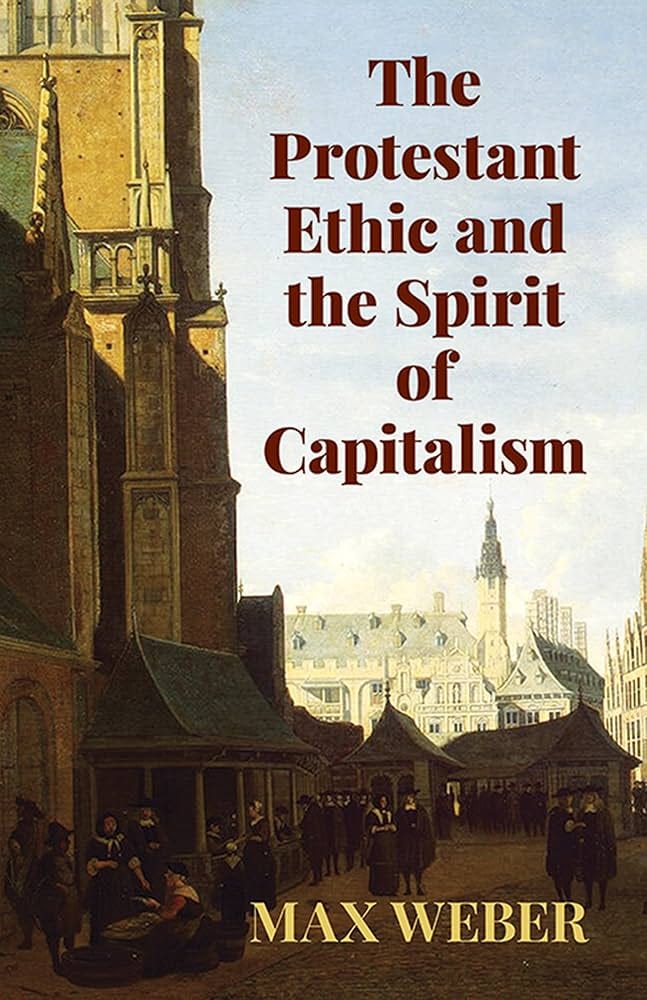
To fully grasp the roots of this paradox, one must return to the historical and religious origins from which capitalism emerged. According to Max Weber, the advent of modern capitalism is intimately linked to the Protestant ethic. The Calvinist doctrine of predestination holds that everyone has a fate they cannot alter because it was predetermined by God. Such beliefs created existential anxiety that compelled the faithful to seek and display status symbols, such as busi ness success and accumulated wealth, which were later seen as evidence of divine favor.
In that cultural and religious context, the family, commu nity, church, and other social institutions were vital. The fam ily functioned as a moral-social framework that consistently inculcated values of frugality, diligence, and personal respon sibility. Simultaneously, the community became a means of social control because it provided benchmarks for moral behavior, including discouraging waste while promoting thrift and reinforcing trust, self-restraint, and investment of accumu lated wealth. Such robust community structures gave mem bers social stability and psychological security while adding meaning to their lives, all of which are essential for long-term investment and calculated financial risks. That led to a rein forcing cycle that drove economic growth and investment.
Although Calvinist and Puritan ideas emerged in Europe during the sixteenth and seventeenth centuries, it was spe cifically in the USA—due to the unique historical and social conditions of the Puritan colonies—that mimetic dynamics reached their full potential, catalyzing significant and unprec edented economic growth. Puritan settlements in North Amer ica established small, highly cohesive moral communities, creating ideal conditions for particularly successful models of material prosperity. Unlike Protestant communities in Europe, often entrenched in rigid, hierarchical social structures, eco nomic success in the American colonies was more openly attainable and thus more readily imitable.
The economic success of these early Protestant commu nities in America did not remain isolated. Starting from the nineteenth century, massive waves of immigration to the USA brought diverse ethnic and religious groups: Catholics from Italy and Ireland, Lutherans from Germany and Scan dinavia, Jews from Eastern Europe, and other immigrants without clear religious affiliations. Despite stark differences in religious and ethnic backgrounds, these groups rapidly and mimetically adopted the economic behaviors characteristic of the original Puritan communities (Girard, 1979, chaps. 1–2; 1987, pp. 7–47). Eventually, immigrant families and commu nities themselves became mediating institutions disseminat ing and reinforcing these new behavioral patterns, even in the absence of any clear theological foundation. Thus, the mecha nism of social imitation detached from its original Calvinist theological context, becoming an independent social and eco nomic phenomenon (Veblen, 1899/1994, chaps. 2–4; see also O’Hara, 2000 for an institutional analysis). The model of eco nomic success, initially developed within a narrow Protestant context, transformed into a universally desirable ideal, driving the rapid expansion of capitalism across the entire USA (Som bart,/19131982, chap. 6; McCraw, 1998, chap. 9).
From the Loss of Theological Context to Moral Detachment: The Transition from Early to Late Capitalism
The insights presented here fit within a broader critical dis course on capitalism, notably identified with Joseph Schum peter and Daniel Bell. Schumpeter argued that capitalism inherently contains seeds of its own dissolution, as its economic successes gradually undermine the cultural and political institutions that initially enabled its rise (Schum peter, 1942). Bell, for his part, emphasized the contradiction between the ascetic Protestant ethos at capitalism’s founda tion and the hedonistic consumer culture that emerged from it, a contradiction he believed threatened social stability (Bell, 1976). This article expands Schumpeter and Bell’s idea using René Girard’s theory of how imitation and rivalry stem from the success of capitalism and erode the social institutions that formed its economic basis.
The process of capitalism’s detachment from its religious moral context did not halt at the boundaries of Protestant ethos. It continued to expand, eventually eroding even the broader humanistic moral foundation articulated by Adam Smith. After the mimetic diffusion of the American eco nomic model became an independent social phenomenon, late capitalism progressively shed not only the Calvinist Protestant religious framework but also the broader moral structure elaborated by Smith. In The Theory of Moral Senti ments, Smith argued that the free market is not an isolated mechanism disconnected from human and social contexts but rather is deeply grounded in moral foundations shared universally by humanity. Central to these foundations is the human capacity for empathy (“sympathy” in Smith’s termi nology), the ability to recognize and resonate emotionally with the circumstances and feelings of others. According to Smith, this empathetic mechanism underpins trust, coopera tion, social responsibility, and fair commerce, all essential for the sustained, effective functioning of a free economy (Smith, 1759/1982, Part I, secs. I–III; Part III, chaps. 1–2).
However, as capitalism expanded, such moral principles were supplanted by a narrower perspective in which growth, capital accumulation, and consumption were ends in them selves divorced from moral and social contexts. Smith’s principles, which assumed the market functions effectively precisely because of a moral and empathetic human founda tion, gradually gave way to a narrower interpretation of capi talism. Within this narrower vision, material growth, wealth accumulation, and individualistic consumerism became independent objectives, relegating the broader moral-social context to the margins of economic discourse.
The Detachment from Realism
Consequently, the NJRC’s critique of the financialized neo liberalism described by O’Hara (2025) extends beyond eco nomic instability to a fundamental detachment from realism. This shift, dominant from the 1970 s onwards, replaced pro ductive growth with cyclical bubbles and crashes. Economi cally, a system reliant on debt and speculation replaces a real productive basis with abstract future obligations. Socially, it severs the market from the concrete reality of the mediating institutions that enabled its rise. The NJRC challenges the implicit neoliberal assumption that the market is a value neutral or “amoral” sphere. Every praxis embodies a theory, and the neoliberal attempt to empty the public sphere of shared moral content is, in itself, a distinct moral claim. The model proposed here seeks to ground the economy back in the real—in actual production, tangible community, and concrete responsibility—rather than in the nominalism of debt and atomization.
The Dissolution of Mediating Institutions: Family, Community, and Meaning in Late Capitalism
An inevitable consequence of this process has been a fun damental shift in the significance of economic success for individuals. Whereas previously material success was per ceived as a sign of divine blessing and an expression of belonging to a cohesive moral community, in late capitalism it has become an autonomous goal, detached from broader community or moral contexts. The original conception of spiritual redemption has given way to an individual aspira tion for material prosperity and social status.
In this contemporary reality, when individuals are offered job opportunities requiring relocation to distant parts of the country for better economic prospects, they frequently accept such offers. Those people often regard such moves as necessary for economic success and prioritize them over maintaining family and community relationships, making Christmas and Thanksgiving visits mere symbolic actions rather than integral components of communal and familial life. Unfortunately, such physical distance frequently leads to emotional, social, and cultural separations that weaken the bonds providing identity and meaning.

Therefore, the movement of labor that modern capital ism requires gradually unravels our shared social fabric. As economic success becomes increasingly individualized, the institutional connections supporting it erode. The heightened focus on personal growth, material wealth, and social mobil ity weakens the stability and strength of social institutions. The extended family diminishes to the nuclear family, and eventually, even the nuclear family itself begins to lose its strength and stability. In a similar vein, such geographical mobility in the name of economic advancement dissolves the community structures that previously supported families and our cultural heritage, leading to the loss of social cohesion provided by family, community, and religion. Late capital ism, which originally depended upon these very institutions for its flourishing, thus finds itself undermining the socio cultural foundations that were essential to its own existence and success. The modern phenomenon of the “lonely crowd” (Ries man, 1950; Slater, 1970; Ortega y Gasset, 1994) has intensi f ied with the spread of late capitalist logic. A new ideal type has emerged: not the hero, the wise person, or the saint, but rather the affluent individual. Material success has become the ultimate measure of value. To compensate for the loss of shared identity resulting from this shift, alternative spaces of identity have emerged. For example, labor unions now pro vide members with a sense of shared class consciously, and some corporations have incorporated HR positions to help employees identify with their workplaces. However, these attempts to create authentic social identity have remained limited, as they rely on contractual and utilitarian connec tions rather than genuine ties of belonging. These structures reflect what Ferdinand Tönnies calls “Gesellschaft” (society) rather than “Gemeinschaft” (community) (Tönnies, 1957, pp. 33–37). According to Tönnies, society is contractual, utilitarian, and regulated, whereas community involves unconditional, emotional, and deeply rooted connections. This distinction closely parallels Friedrich Hayek’s differ entiation between a “small order” and an “extended order” (Hayek, 1988, pp. 11–28).
A small order is characterized by close, personal rela tionships within a community, providing individuals with a sense of identity, belonging, and meaning. In contrast, the extended order, characteristic of modern capitalist societies, depends on abstract, contractual, and anonymous relation ships, where social coordination and order are achieved primarily through market mechanisms, exchange, and indi vidualistic competition. The gradual shift from the small order to the extended order has indeed been vital to capital ism’s economic success but simultaneously planted the seeds of the social and existential crises characteristic of the late capitalist era.
Before industrialization, the “small order” gave workers identity, contextual meaning, and a shared cultural identity. However, the modern “extended order” has weakened such connections, leading many to view society as an anonymous, bureaucratic entity that makes it challenging for members to establish a sense of personal significance and identity. For example, traditionally, women gave birth in the company of their mothers, grandmothers, and other senior matriarchs. Today, birth occurs in institutional settings. Subsequently, caring for a newborn has become a procedure learned via apps or manuals. Without traditional community support, young parents must rely on electronic guides to learn basic tasks such as feeding or soothing their infant. Yet no manual can replace the aunt who patiently demonstrates how to hold the baby or the genuine emotional support provided by a community rooted in deep human ties.
This process of losing communal cohesion and transition ing to purely bureaucratic and contractual relations has been effectively described by Max Scheler. He sharply contrasts the natural community (Gemeinschaft), which is founded upon deep personal and organic ties among its members, with the modern social formation he calls “Masse” (mass society). Mass society is characterized by an absence of a clear internal center and relies on temporary, superficial rela tionships based on momentary emotional enthusiasm and shallow emotional contagion (Ansteckung). Unlike the com munity, in which individuals experience a stable identity, responsibility, and meaningful belonging, the social mass fails to offer members authentic value-based meaning or a deep sense of connectedness (Scheler, 1994, p. 84).
Social media emerged within this context of social ten sion, explicitly promising to “connect people.” In reality, social media represents the clearest expression of the habi tus (Bourdieu, 1984, pp. 169–175) of late capitalism and is the arena where mimetic dynamics are exhibited with exceptional intensity. These platforms function not merely as communication tools but as infinite spaces of imitation, competition, and constant comparison, where users continu ally strive for social status, recognition, and attention. Thus, mimetic dynamics create the habitus that effectively struc tures the social order in the postmodern capitalist era. The result is paradoxical: The explicit promise of community and unlimited social connection instead deepens isolation and alienation. As users compete for imagined social rec ognition, their actual social ties weaken, leading to a reality in which individuals are seemingly surrounded by others yet remain profoundly isolated (Turkle, 2011, pp. 188–190, 299–300). This loneliness, directly generated by intense mimetic dynamics, intensifies feelings of rivalry and pro motes recurrent patterns of social denunciation and scape goating, wherein the public condemnation of others becomes a substitute for authentic social connections.
The Mimetic‑Capitalist Paradox: Material Success and the Fertility Crisis in Western Society
As modern Western societies become wealthier and social mobility and consumption increase, many people feel pres sured to imitate those at the top of their social and economic hierarchies. This mimetic pressure translates into a sustained erosion of mediating institutions, namely the family, reli gion, and community, which come to be perceived as con straints upon personal freedom and individual success. Con sequently, the individual appears liberated from traditional social bonds, yet the cost manifests in mounting alienation, loss of shared identity, and, ultimately, severe social crises.
The collapse of communal bonds and the transforma tion of modern individuals into isolated units within con sumerist spaces are not merely a psychological or moral phenomenon; these are also clearly evident in concrete social indicators (Putnam, 2000; Wilkinson & Pickett, 2010; Twenge, 2017, pp. 93–118). Although there has been a dramatic improvement in material economic met rics, exemplified by a substantial rise in GDP per capita in the USA between 1960 and 2020, several indicators of psychological distress and social fragmentation have dete riorated sharply: fertility rates have declined by more than half since the mid-twentieth century, suicide rates have increased by approximately 33% between 1960 and 2023, and drug overdose mortality has surged to unprecedented levels compared to the negligible numbers recorded in the 1960 s (Massey, 1967; National Center for Health Statis tics, 2025a, 2025b; The World Bank, 2025; USAFacts, 2024). Such figures indicate an increasing gap between our technical success and moral meaning or our freedom and responsibility.
Meanwhile, Western academia has produced three pri mary discussions that have undermined how we perceive the meaning of our human existence. First, positivism has portrayed humans as entities governed by mechanistic laws, negating the concept of freedom and rendering all human actions devoid of intrinsic meaning (Husserl, 1970, pp. 3–10). Second, postmodern perspectives portray human beings as trapped inside a web of conflicting interpreta tions, unable to discern an objective truth and, thus, lacking the ability to determine our existential meaning (Lyotard, 1984, pp. xxiv–xxv, 37–41). Concurrently, certain perspec tives highlight how familial and social relationships can act as deterministic forces that shape consciousness and chal lenge notions of freedom and responsibility, while others emphasize the enduring human capacity to find meaning and agency within these constraints (Frankl, 2006, pp. 130–140; Fromm, 1941, pp. 66–105). Those three perspec tives, compounded by late capitalism’s atomized logic, have contributed to contemporary humanity’s existential crisis. In the face of this crisis, existentialist thinkers like Albert Camus paradoxically conclude that even in the face of life’s absurdity, happiness is possible through awareness and rebellion—arguing, as Camus did, that Sisyphus is happy (Camus, 2005, p. 111).
This process has led to a significant decline in birth rates within Western societies. As family and community frame works lose their stability and centrality, and as individuals become increasingly focused on their personal success and accumulation of wealth and social status, investing in rais ing children and creating large, stable families becomes less appealing and economically feasible. Therefore, Western ers are forming smaller families later in life, if at all, creat ing aging demographics that struggle to sustain themselves and their cultures, economies, and social fabrics. Thus, the very process that began as unprecedented economic growth ultimately leads, in the long run, to a profound social and demographic crisis undermining the stability and future of capitalist society itself (Kaufmann, 2010, Introduction & chaps. 1–2; Stone, 2020).
These processes operate through a mechanism of “cir cular and cumulative causation” (CCC), as articulated by Myrdal (1957) and Kaldor (1972), which emphasizes how initial economic successes trigger self-reinforcing cycles that interact across social, economic, and environmental domains. As mediating institutions weaken, the resulting decline in social trust and human capital formation feeds back into the economy, contributing to the stagnation of productivity and long-term growth, as evidenced by the halving of growth rates in advanced economies over the past 50 years (O’Hara, 2009; 2025, Ch. 11; see also Gor don & Sayed, 2024, for US productivity slowdowns from 1950 to 2023). In the context of late capitalism, the forward thrust of creative destruction—driving growth and produc tivity—initially channels mimetic rivalry productively, but cumulatively erodes mediating institutions, leading to social fragmentation and declining fertility. These negative effects, in turn, exacerbate social and ecological polycrises, where a market order oriented toward short-term expansion exter nalizes environmental costs, increasing climate risks that subsequently intensify economic volatility and social con f lict. Consequently, the crisis of late capitalism reveals itself as a structural disembedding of the market from the social economy: the very mechanisms intended to drive expan sion paradoxically generate a self-reinforcing cycle of social fragmentation, ecological strain, and economic deceleration, perpetuating a downward spiral unless balanced by institu tional interventions like those proposed in NJRC.
What emerges clearly from this analysis is that the suc cess of late capitalism creates a fundamental structural problem: the economic growth that effectively channels mimetic rivalry away from violence and toward productive competition relies heavily on social mobility. Yet, this very social mobility systematically weakens mediating institu tions, dismantling family and community ties. This phe nomenon breeds growing feelings of alienation, loneliness, and a relentless pursuit of individual success, within which family formation and expansion are viewed as conflicting with self-realization or at least as low-priority goals. Conse quently, a profound fertility crisis has emerged, as evidenced today in most of the Western world. Thus, we witness the deep paradox at the heart of late capitalism’s success: late capitalism has triumphed economically but, in doing so, has fundamentally destabilized the social conditions that made its success possible.
Given the mimetic tensions permeating late capital ism, a continuous impulse arises to relieve these tensions through the identification of economic scapegoats. The mimetic dynamic, which favors competition more than prestige, social status, or recognition, also creates a need to relieve such tensions by blaming those responsible for monopolizing power and increasing inequality. Often, such sentiments are directed toward corporations, wealthy indi viduals, or successful business leaders, transforming them into targets of intense public hostility. Such mimetic logic often leads the public to interpret financial success as a sig nal of exploitation or injustice; i.e., those who are wealthy create impoverishment for others, an emotional zero-sum construct. Hence, those who achieve economic success are perceived as oppressors, while those who do not succeed are viewed as oppressed, thus morally justified in their hos tility. This tension demands an outlet. It dehumanizes the “economic other”—the bourgeoisie, the tycoon, the Jew, the system—transforming them into targets of moral condemna tion. Communities may seek meaning for their internal cri ses by symbolically condemning an external entity perceived as an abstract “enemy.” In a distinctly Girardian manner, a free market stripped of institutions capable of moderat ing desire also becomes vulnerable to symbolic scapegoat ing dynamics. This phenomenon is particularly evident in populist rhetoric—on both the radical left and nationalist right—which frames “upper classes” or “economic elites” as unifying targets of resentment, promising emotional release and a righteous self-image for the allegedly oppressed.
When faced with a society where the capitalist paradox creates scapegoat politics, we must ask ourselves how to create a socio-economic model that relies on moderating and guiding institutions instead of allowing the entire capitalist system to collapse. Israel provides an example of such a model, albeit on a smaller scale than many other Western societies.
Case Study: Israel as a Model of Republican Capitalism—Growth with Mediating Institutions
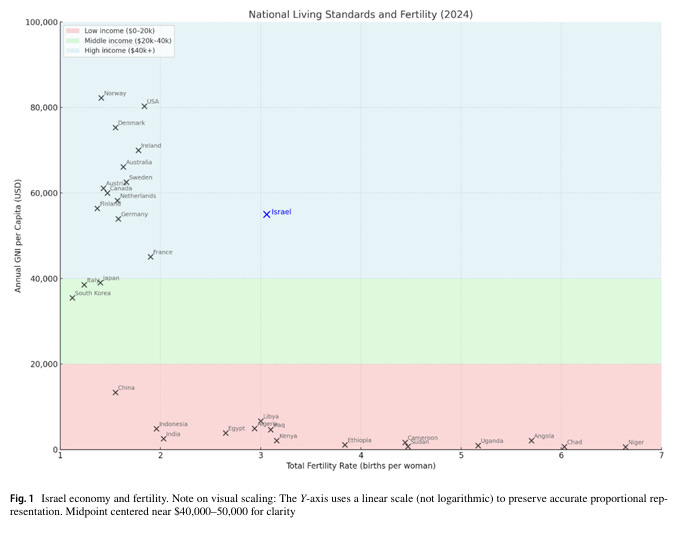
While many capitalist societies in the West are experienc ing the weakening of mediating institutions such as family, community, and national identity—processes accompanied by declining fertility rates and increasing feelings of aliena tion—Israel offers a distinct structure: a growing economy sustained by a vibrant network of institutions that nurture belonging, tradition, and civic obligation (Guttman Center for Surveys & Avi Chai Foundation, 2009; Israel Democracy Institute, 2023; OECD, 2025). I do not intend to argue that these institutions fully explain Israel’s economic success or its unique demographic profile. Nonetheless, as of 2025, the fertility rate among Jewish women in Israel is approximately 3.1 children per woman, while GDP per capita is estimated at around $58,474 (International Monetary Fund, 2023; Weinreb, 2024).
This correlation between economic prosperity, fertility rates, and the existence of institutions promoting belonging, culture, and identity is noteworthy in itself, even if it merely indicates correlation rather than establishing causation—an observation supported by broader literature on Israeli soci ety and demographic trends, rather than by a single source that directly links these factors (Fig. 1) (The World Bank, 2020a; Weinreb, 2024; Guttman Center for Surveys & Avi Chai Foundation, 2009; Israel Democracy Institute, 2023). (Similar to the comparative trends noted earlier, between 1960 and 2020 Israel’s GDP per capita increased sharply by approximately 480%, while the fertility rate among the Jewish population remained nearly stable, the suicide rate declined by 60%, drug use rose dra matically, and mortality from drug use increased tenfold (The World Bank, 2020a; Federal Reserve Bank of St. Louis, 2025; The World Bank, 2020b; World Life Expectancy, 2025).
Social institutions in Israel embody a distinctive heritage, rich with religious, historical, and cultural layers that shape public life, in contrast to some Western societies where tra dition has become a private matter.
Thus, Israel provides an environment that preserves a constant cultural bond, creating a framework that situates its citizens within a historical, cultural framework.
For example, Shabbat, the Jewish Sabbath, provides a recurring social time unit that creates a break from economic activity while creating a communal life axis. Approximately 70% of the Jewish population in Israel regularly share tra ditional family meals on Friday nights, meaning millions of citizens engage weekly in a collective event infused with values of belonging (Senor & Singer, 2024), closeness, and living cultural memory. Therefore, the Sabbath anchors communities in stable, intergenerational, and cultural rela tionships that are independent of market dynamics, allowing the family to remain an active support network from the cradle to the grave.
A similar function is fulfilled by additional collective commemorative days in Israel, such as national memo rial days, which serve as collective sites of consciousness. These days are not perceived merely as leisure or consump tion opportunities but rather as structured cultural cycles of memory and identification, actively participated in by large segments of the public. That public participation creates a shared moral awareness, which deepens the sense of belong ing and reinforces the bond between people and their soci ety’s history (Gur et al., 2024; Tixell, 2025).
While considering societal measures that help sustain capitalism, let us direct our attention toward living spaces. Israel has diverse settlements, frequently organized to pro mote a sense of community. Moshavim, kibbutzim, commu nity villages, and settlements serve not merely as residential units but as social collectives defined by shared identities, mutual commitments, and enduring interpersonal networks (Letzter, 2023; Schwake, 2020). Even within major cities, thousands of small communities maintain local and coopera tive lifestyles. Furthermore, Israel is a relatively small coun try, allowing families to remain connected despite members living in separate communities, which creates a sense of belonging, continuity, and social memory.
Moreover, Israel’s compulsory military service is cul turally significant. The Israel Defense Forces (IDF), which recruits the majority of the Jewish population at age 18, play a social role that extends far beyond security. Military ser vice places individuals within a broader national framework, offering opportunities to participate in collective efforts alongside peers from diverse backgrounds, positions, and identities. Therefore, Israel’s military creates a sense of civil responsibility and national solidarity by creating connec tions regardless of class and a selfless shared consciousness. Finally, many Israeli civic societies are volunteer organi zations. Recent studies show that over 45% of Israeli adults take part in nonprofit work, community initiatives, and mutual assistance programs, one of the highest levels in the world (Hebrew University Center for the Study of Civil Society and Philanthropy, 2023).
This phenomenon is prominently exemplified in the extensive network of charitable institutions known as “Gemachim” (acts of loving kindness), non-governmental organizations providing interest-free loans, medical equip ment, clothing, food, supplies for family events, and various additional services, often operating out of private homes or community buildings. These institutions rely primarily on social capital rather than economic incentives. One distinct example of institutionalizing this model on a large scale is Yad Sarah, an organization providing medical equipment and rehabilitation services throughout Israel via thousands of volunteers operating dozens of branches (Pietrokovski & Zini, 2006). Such organizations fulfill a stable and produc tive social function independent of both state intervention and market pressures, rooted instead in shared values of trust, partnership, and civic solidarity.
Within this context, mimetic desire in Israel takes on dis tinctive characteristics. Israelis often channel their desires beyond individual recognition and power toward societal belonging, human closeness, and historical and relational continuity. Indeed, most Israelis think of human loss, such as abortion, as sorrowful rather than a display of female empowerment. Stillbirth is treated as a tragedy rather than a status; abortion is experienced as a painful decision rather than a statement of independence. The emotional experi ence is embedded within a narrative framework where human worth is not defined solely by individual choices or material achievements but emerges fundamentally from the social and cultural contexts within which individuals are anchored.
Thus, mimetic dynamics in Israel differ markedly from those prevalent in many Western societies. Mediating institu tions offer individuals structures of belonging, cultural direc tion, and moral clarity. Unlike contexts where institutional disintegration leaves desire unanchored, in Israel, desire does not necessarily feed into competition and material attainment but often manifests itself through relationships of mutual belonging, partnership, and collective meaning.
For instance, groups that elsewhere in the West define their identity in opposition to societal norms instead seek integration in Israel. The central public struggle of the LGBT community in Israel did not center primarily on privatizing their identity or on claiming the right to difference but rather on the right to establish families and adopt children, aiming thus to be integrated within existing normative structures rather than challenging them fundamentally. The desire for recognition has operated through identification with existing institutions rather than through their rejection. This illus trates how even mimetic desires initially positioned outside the mainstream operate within a cultural framework in which collective belonging is central (Ilany & Ilany, 2021).
From this institutional structure emerges a distinctive demographic phenomenon. Israelis perceive the desire to create a family as a cultural response to the need to belong rather than a personal choice. They see it as a profound personal and familial achievement rather than a risk or limitation. Thus, the Israeli institutional structure funda mentally reshapes mimetic dynamics, transforming compe tition into a sense of belonging and enabling the desire to generate life in biological, cultural, and communal senses simultaneously.
This system of living institutions, distinctive cultural networks, and common moral consciousness makes Israel a valid case study of how social desire can structurally sup port capitalism through community commitment, historical and cultural continuity, and a profound sense of belonging.
Toward a New Form of Neo‑republicanism
Economics, like any field of human activity, is not neutral. It is embedded within a network of moral-human connec tions and thus inherently bound to questions of purpose and responsibility. Political and ethical thought, therefore, is incomplete without addressing the socio-economic model it engenders. In recent years, two primary neorepublican para digms have emerged (Pettit, 1997; Skinner, 1998; Maynor, 2003).
On the one hand, the neo-Roman model views the citizen primarily as a rational, autonomous individual who must be protected from arbitrary governmental power, thus favor ing a model of institutional, formal capitalism. Therefore, systems that follow this model regulate their markets, prop erty rights, and financial mechanisms with clearly defined laws and see freedom as an absence of coercion instead of a binding set of morals. In consequence, they lack internal moral structures that guide individual behavior. Within this paradigm, individuals stand before the law as isolated enti ties needing protection from tyranny; hence, freedom is con strued as legal protection, a negative right, often culminating in a libertarian orientation in which property rights, the free market, and minimal government intervention become pre conditions for a moral life.
In contrast, Athenian republicanism encourages pub lic participation as the driving force of politics and places political life above individual life. Athenians shaped city life collectively and considered political engagement as a form of freedom. Public discourse and collective decision making are the backbone of government legitimacy. Those ideals created a communitarian approach to economics in which shared civic responsibility is integrated with the free market. Thus, the Athenian model may sometimes seem like a social-democratic structure where state involvement cre ates civil solidarity.
However, the Israeli case does not align neatly with either of these models, presenting an opportunity to conceive of a third approach: Neo-Jerusalemite Republican Capitalism (NJRC). According to NJRC, individuals are fundamentally shaped by networks of connection. In Jerusalem, the com munity constitutes the individual, and freedom emerges from covenantal bonds rooted in loyalty to shared moral frame works. Consequently, this produces a distinct economic model, not grounded in an opposition between market and society but rather in moral responsibility embedded within an integrated social space. Thus, the NJRC model is an example of humanity’s quest to realize its purpose instead of an external mechanism for resource distribution, and freedom becomes a mission. That freedom is more than a removal of constraints. It becomes a commitment to a col lective ethical framework nourished by national, familial, and historical connections.
In this sense, NJRC is not merely a system of free enterprise but rather a moral and economic foundation for structured freedom. It rejects the libertarian tempta tion to conceive of the individual as an isolated entity, detached from natural communal bonds. At the same time, it rejects the social-democratic tendency to delegate moral and social responsibilities entirely to the state. Instead, it positions individuals at its center as citizens and cov enantal partners who operate within frameworks of law, community, and shared meaning—not merely as recipients of bureaucratic mechanisms or isolated consumers but as active participants shaping a moral space. The NJRC’s principles extend to helping human beings flourish crea tively, responsibly, and consistently while cultivating a dignified living environment.
Furthermore, the NJRC concept does not conform to the idea that freedom is an absence of limitations. Instead, it asserts that freedom is the result of supportive moral and institutional frameworks that enable, guide, and safeguard it. Consequently, Neo-Jerusalemite Republi can Capitalism requires a lean yet actively engaged state, a vibrant living tradition, a dynamic community, and an open market governed by standards of moderation, responsibility, and justice.
In many ways, NJRC shares foundational principles with the ordoliberalism (or “ordo-capitalism”) that emerged in post-World War II Germany, where it was similarly recog nized that a free market could not sustainably operate with out a clearly defined moral and legal framework (Eucken, 1950; Goldschmidt & Wohlgemuth, 2017). Ordoliberalism advocates limiting monopolies, promoting competition, ensuring stable currency, protecting property rights, struc turing market institutions, and guaranteeing equal entry conditions for all market participants. In this view, the state shapes the economic order but does not intervene directly in market processes themselves—economic freedom thus requires structure rather than anarchy.
However, NJRC extends beyond traditional ordoliberal ism by assigning central importance to mediating institu tions, particularly the family and community. In Hayekian terms, it posits that the success of the extended order funda mentally relies upon the health of the smaller, intimate order. When necessary, the principles of the intimate order must limit those of the extended order.
Many connect capitalism with expanded individual freedom and reduced governmental oversight. Therefore, they might perceive it requiring institutional boundaries as paradoxical. However, such restrictions, far from being arbi trary limits, are essential for economic and social liberty. To clarify this idea, one might compare it to the way defined constraints enable artistic creativity in music. A harmoni ous musical composition does not arise from absolute free dom but from adherence to strict rules governing scales, rhythms, and precise notes. If each musician were to play purely according to individual preference without shared guidelines, the result would be a cacophony. However, when musicians accept the rules, they cease to be restric tive and instead create harmony, leading them toward their full, collective musical potential. Just as musical creativ ity depends on clearly defined frameworks, a stable and healthy economy requires a well-defined institutional and moral structure.
Similarly, within the socio-economic framework of the NJRC model, setting institutional boundaries—manifested in the preservation and nurturing of mediating institutions such as family, community, and tradition—is precisely what enables the system’s stability and prosperity over the long term. According to the NJRC model, the free market does not rely merely on abstract universal principles but draws its strength from a living tradition, shared history, and cul tural identity, anchoring the market in a concrete human and moral foundation.
A distinctive contribution of the NJRC model lies, among other things, in clearly outlining to policymakers the crucial role of mediating institutions and demonstrating precisely how essential they are for ensuring the long-term stability and sustainability of free-market capitalism itself.
A. Knowledge Constraints and Epistemic Humility
The NJRC model is founded on acknowledging the inher ent limitations of human knowledge and governmental insti tutions. Just as market failures exist, governmental failures also occur, and often with greater severity. Public policy fre quently suffers from political biases, reliance on incomplete information, problematic incentives, and a tendency to per petuate ineffective institutional structures. Thus, a reliable economic system does not require us to move power from the market to the state, but instead, we must recognize the limitations inherent in state interventions. As exemplified by the USSR, attempts to centralize knowledge, markets, and outcomes are doomed. Therefore, the state should establish equitable rules instead of attempting to dictate specific out comes. Thus, policymakers must maintain epistemic humil ity and recognize that economic coordination comes from free interactions between individuals rather than central mandates because that is the only way to sustain economic freedom.
B. The State’s Role and Its Limits
The NJRC framework clearly defines and limits the state’s role. Thus, the state has a monopoly over the legiti mate use of force and is responsible for internal and exter nal security. Its primary function is to ensure fundamental conditions necessary for the free market to operate: protec tion of property rights, enforcement of contracts, preserva tion of fair competition, maintenance of the rule of law, and delivery of impartial justice. The state must guarantee equality before the law—in both rights and obligations— ensuring no individual is favored or discriminated against due to their origin, social status, or political connections. The state thus provides a neutral and universally applicable legal framework.
Therefore, the state’s responsibilities are limited to pro viding targeted, temporary assistance to citizens facing gen uine hardship, aligning with Ze’ev Jabotinsky’s foundational principle of guaranteeing food, housing, clothing, education, and healthcare. The state should, therefore, offer generous but temporary unemployment assistance, basic healthcare services, and foundational education. The purpose of this support is not to encourage dependence but rather to enable individuals to regain self-sufficiency and participate actively and freely in an open society (Jabotinsky, 1934/1949, pp. 295–302).
Moreover, state investment in public infrastructure is jus tified solely when indispensable for the efficient functioning of the free market and when competitive private solutions are unavailable. Such investments must be goal-oriented, limited in duration, and evaluated based on their contribu tion to liberating rather than constraining the market. Even then, direct state management or operational centralization should be avoided in favor of regulations promoting compe tition, outsourcing, and innovation.
It is explicitly not the state’s role to manage the economy, dictate wages or prices, or direct private investment. Nor is it the state’s role to redistribute wealth or guarantee equality of outcomes. Attempts at ensuring substantive equality of opportunity exceed state authority, require intrusive control over individual circumstances, and risk undermining per sonal freedom itself. Therefore, the state should refrain from central economic planning and instead establish stable con ditions that allow economic participation while guaranteeing minimal ethical standards that prevent societal degradation without imposing predetermined outcomes.
C. Fiscal Justice and Freedom from Forced Association
The NJRC proposes a simple, uniform, and equitable tax system. The purpose of taxation is to finance essential institutions—such as law enforcement, national security, and fundamental infrastructure—not to engineer equal out comes. As the market grows freer, more accessible, and more competitive, tax rates can be reduced, thereby expand ing individual liberty. Income tax should be as low as pos sible, uniform, and independent of the taxpayer’s identity or social status. Tax burdens should be based on the principle of personal responsibility rather than ambitions of “social correction.”
As markets become deeper and more sophisticated, it becomes feasible to replace universal welfare systems with targeted support for those genuinely in need. Effective taxa tion policy does not attempt to control the market but rather funds the conditions that allow the market’s free functioning.
Alongside the protection of property and occupational freedoms, contractual freedom must also be ensured. No individual should be compelled to adhere to collective agreements to which they have not consented, nor should employers be forced into negotiations with unions not chosen by their employees. Legislation granting pref erential or exclusive legal status to unions undermines free choice, harms productivity, and may disrupt public institutions.
The right to freedom of association does not extend to coercing membership. A republican state must protect both the freedom to associate voluntarily and the right not to be forced into association.
D. Mediating Institutions, Communal Time, and Liberty Supporting Constraints Economic freedom cannot exist sustainably without a supportive moral, cultural, and institutional framework. Therefore, the NJRC advocates for specific public policies that limit capitalism, such as constraints sometimes seen as regulatory burdens, in order to ensure its long-term, stable sustainability. Examples include the following:
1. A Weekly Day of Rest and Regulated Business Hours
A day off from work each week. The Sabbath and lim ited daily trading hours may appear to restrict economic activity. However, that time free from work or consump tion creates the ideal conditions for family and communal relationships to thrive while allowing individuals to recu perate psychological and physical robustness, preventing burnout.
2. The Right to Disconnect
Policies clearly separating work and personal time—such as restricting professional communication outside official work hours—might initially appear to hinder organiza tional efficiency. However, in the long term, such meas ures reduce employee burnout, strengthen family stability, and mitigate social alienation resulting from continuous professional availability.
3. Encouraging Long-Term Savings and Limiting Con sumer Credit Policies regulating and restricting the availability of easy consumer credit, combined with the active encourage ment of long-term savings and investment mechanisms, are sometimes viewed as constraints on short-term eco nomic freedom. Nevertheless, encouraging financial liquidity for citizens prevents consumer bubbles and debt crises, creating a more responsible economic, family, and community environment, which helps to prevent social disintegration.
4. Urban Planning Emphasizing Community Spaces
Prioritizing public spaces over commercial ones in urban planning might limit short-term profitability but creates social environments that enhance the public’s sense of belonging, reduces social isolation, and supports long term prosperity.
5. Public Support for Community Centers and Cultural Institutions
Giving public funding to cultural institutions, and thus cultivating a shared ethos, creates a stable cultural space that reinforces community cohesion and collective iden tity. Far from restricting free-market activity, this type of state intervention provides the conditions necessary for a healthy, efficient, and sustainable market.
Discussion The Unique Contribution of the Neo‑Jerusalemite Model
This author believes that establishing clear limits for capi talism will resolve its internal contradictions. Such limits should not be arbitrary but provide the essential conditions for the stable and full realization of the economic and social system. The NJRC model emphasizes a state that assumes limited yet consistent responsibility, carefully cultivating institutions of virtue such as family, religion, tradition, and community, thereby providing fertile ground for sustainable economic growth. Traffic lights might seem to restrict move ment. However, they actually regulate it so that individual vehicles may flow freely. In a similar vein, mediating insti tutions in capitalist economies create a framework for free markets to flourish without eroding the foundations that sup port them. Therefore, the NJRC is ideally suited to revital izing capitalist economies while maintaining the liberty that is inseparable from responsibility and the sense of belonging that prevents us from falling into the ruthless individualism that would destroy both our economic freedom and social fabric.
Shared Diagnosis, Divergent Institutional Remedies
It is pertinent to acknowledge that the diagnosis of these “poly crises” aligns with critical perspectives often associated with the “New Left” (O’Hara, 2022, 2025). Both approaches iden tify the commodification of social life as a destructive force. However, the NJRC diverges fundamentally on the institutional remedy. Rather than seeking a solution through expanded state intervention or the dismantling of market mechanisms, the NJRC posits that the necessary counter-balance to atomiza tion is the revitalization of civil society’s pre-political institu tions. The goal is a “re-embedded” market, constrained not by bureaucracy, but by a robust ethical culture.
The NJRC model does not claim to offer a singular, defini tive solution to the social crises of late capitalism. Instead, it provides a critical and theoretical middle path between lib ertarian and social-democratic approaches. Its strength lies in rethinking the relationship between mediating institutions, free markets, and long-term social stability, avoiding both extreme individualism and excessive state centralization. Con sequently, the NJRC is a potential solution to the acute fertility crisis in Western countries by providing a socio-economic framework where family and community are not perceived as burdens but as sources of personal and collective meaning and stability. Therefore, the NJRC is a significant contribution to the present discourse concerning the failings of contemporary capitalism and offers a foundation upon which to reconsider the relationships between economic freedom, social respon sibility, and mediating societal institutions.
Ecological Sustainability and Intergenerational Stewardship
Furthermore, the NJRC framework addresses what O’Hara (2025) identifies as the ecological dimension of capitalism’s “polycrises.” The logic of unchecked mimetic desire, which treats social capital as a resource for immediate extraction, applies equally to natural capital. A market disembedded from moral constraints tends to exhaust environmental resources just as it exhausts communal bonds, prioritizing short-term consumption over long-term viability.
In this context, the NJRC’s emphasis on mediating institu tions fosters an ethos of stewardship essential for ecological sustainability. Practices such as the Sabbath—a mandated cessation of production and consumption—and the republi can commitment to intergenerational continuity train citizens to act as guardians of their inheritance. By placing limits on the “extended order” of the market, the NJRC model suggests that sustainable capitalism requires preserving not only the social ecology of the family but also the physical ecology upon which all economic activity ultimately depends.
Limitations of Generalization and the Israeli Uniqueness
It is essential to clarify the scope of this analysis. The empirical discussion in this section focuses primarily on mediating institutions that are especially salient within Jewish Israeli society. A further limitation concerns civic inclusion and republican legitimacy. Many readers will view Israel as an incomplete or contested case of good governance because Palestinians are not meaningfully included within the broader system of governance. This article does not resolve that normative and political prob lem. The Israeli case is therefore used in a narrow, descrip tive sense to illustrate how certain mediating institutions can coexist with economic growth and high fertility, not to offer a general endorsement of the Israeli polity as a fully inclusive republican model.
A separate explanatory question concerns the sources of social cohesion. Some accounts attribute Israeli cohe sion primarily to external threat or conflict. To distinguish cohesion produced by external pressure from cohesion sustained by internally chosen commitments, I draw on J. B. Soloveitchik’s distinction between a Covenant of Fate, imposed by external threats, and a Covenant of Destiny, chosen through shared values (Soloveitchik, 2000). This conceptual distinction does not settle the inclusion prob lem noted above. It is used here only to clarify the mecha nism of cohesion relevant to the case study.
While the geopolitical conflict indeed imposes a Cov enant of Fate, the NJRC model is rooted in the Covenant of Destiny—the active choice of a life of meaning and community. Empirical evidence reinforces this: high fer tility rates and robust community bonds are observed not only in Israel but also among Orthodox Jewish commu nities in the Diaspora. For instance, Orthodox Jews in the USA average 3.3 children per adult compared to 1.5 among non-Orthodox Jews (Pew Research Center, 2021), and Haredi women in the UK have a total fertility rate of 6.04 children (Staetsky & Boyd, 2015). Since these communities share the “Covenant of Destiny” but do not participate in the state’s geopolitical control, it suggests that the drivers of social resilience are cultural (internal) rather than political (external). Thus, the model stands as an analysis of civic republicanism within the citizenry, distinct from the broader geopolitical disputes surround ing the region.
Risks of Excessive Communitarianism
Excessive communitarianism could become socially restrictive, diminishing personal freedoms, increasing social pressures, and producing excessively rigid cul tural controls that limit human creativity. Therefore, despite the importance of mediating institutions, imple menting a version of the NJRC model would require specific measures that protect individual autonomy and prevent market alienation from being replaced by com munal tyranny.
Limitations of Mimetic Desire Theory
Despite René Girard’s mimetic desire theory making a sig nificant contribution to our understanding of economic and cultural systems, it may oversimplify some social phenom ena. Numerous psychological, biological, and structural fac tors influence human behavior. Therefore, over-relying on a single theory might limit our understanding of economic and social mechanisms. Therefore, future research should combine mimetic desire theory with other perspectives to create a more comprehensive understanding of how to over come the social factors undermining the sustainability of late capitalism.
Open Questions for Practical Implementation
There are many unresolved questions surrounding the ideal nature of state interventions required for the practi cal implementation of the NJRC model. For example, what state interventions should we use to balance social stability with private initiatives and economic freedoms? Future stud ies should clarify theoretical and empirical research to help comprehend and effectively implement the NJRC model.
Practical Challenges in Implementing the Model
Implementing the NJRC model will probably provoke sev eral challenges. The public may resist new restrictions on economic activity and personal freedom. That would require robust political leadership that could withstand pressure from civil society and commercial interests advocating for deregulation. Furthermore, increasingly globalized and digi talized economies could make implementing national insti tutions that protect communal and cultural cohesion chal lenging. Thus, those wishing to implement the NJRC model must adapt to both domestic and international conditions.
In conclusion, the NJRC model significantly contributes to scholarly discourse by offering an open, constructive, and balanced framework for reconsidering the interac tions between free markets, social stability, and mediating institutions.
***
Full bibliography and citations can be found in the official publication link